

I have always loved handbags—not only for how they look, but for what they represent. A beautifully designed bag can communicate confidence, personal style and an appreciation for craftsmanship before a word is spoken.
But over the years, both as a brand professional and as a woman balancing work, business, family and everything in between, I kept encountering the same frustration: many luxury handbags are beautiful, but they are not designed for the reality of modern life.
Women rarely move through just one role in a day. We may begin the morning carrying a laptop into a meeting, work from a café in the afternoon, collect children, run errands and then head to dinner or an event. The bag beside us needs to move through all of those environments without looking overly corporate, feeling impractical or requiring us to carry a second bag.
Yet many luxury handbags still ask women to choose between elegance and function.
Why does this problem still exist?
Traditional luxury handbag design has often been led by the exterior. The focus is placed on the silhouette, the leather, the hardware and the recognisable details that make a bag visually desirable.
These elements are important. Proportion, construction and material quality all contribute to whether a handbag feels truly luxurious. But the interior architecture of a bag is just as important—and it is often where functionality becomes an afterthought.
A single open compartment may create a clean construction, but it does very little to support the person carrying it. A laptop, charger, notebook, sunglasses, keys, makeup and personal items all end up sharing the same space. Smaller belongings disappear to the bottom, charging cords become tangled and heavier items move around as the bag is carried.
This is not simply inconvenient. It can also affect how the bag performs over time.
When weight is not properly distributed, the shape of a bag can become distorted. A laptop placed loosely against other belongings may put pressure on the leather, lining and base. Without secure compartments, items move around, making the bag feel less balanced and more difficult to use.
At the other end of the spectrum, many traditional work totes provide plenty of room but lack refinement. They can feel too large, too open or too corporate to transition naturally into the rest of the day. Capacity alone does not make a bag functional. Thoughtful organisation, accessibility, security and proportion matter just as much.
What actually makes a handbag functional?
Functionality is not about adding as many pockets as possible. In fact, too many poorly positioned compartments can make a handbag more frustrating to use.
Good handbag design requires an understanding of how women naturally reach for and organise their belongings.
Frequently used items such as a phone, keys or cardholder should be easy to access. A laptop should be held securely rather than moving freely through the main compartment. Cables and chargers need their own defined space so they do not become tangled with smaller personal items. Valuables require greater security, while the overall layout should remain intuitive rather than overly complicated.
The positioning of each compartment also affects the structure of the bag. Weight needs to be distributed thoughtfully so the bag remains comfortable to carry and retains its intended silhouette.
This balance is more difficult to achieve than it may appear. Every internal feature affects the external design. A laptop compartment adds structure and volume. A central divider changes how the bag opens. Hardware placement affects weight and movement. Even a few millimetres can alter the proportions of the finished bag.
That is why genuinely functional luxury design must begin from the inside out. Organisation cannot simply be added at the end of the process.
The frustration that led me to design Ardalci Lykke
When I began developing Ardalci, I was not interested in creating another conventional work tote.
I wanted a handbag that reflected how I—and many other women—actually live. It needed to carry the practical essentials required during the day, including a laptop, without immediately looking like a laptop bag. It also needed to feel polished enough to carry into a meeting, a restaurant or an evening setting.
That became the foundation for the Ardalci Lykke.
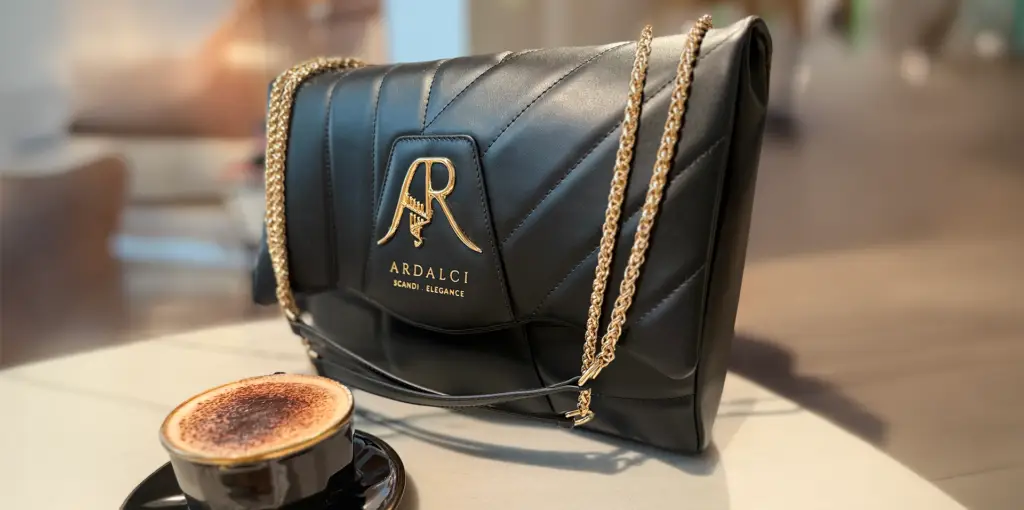
Designed by a Norwegian and crafted in Italy from premium leather, the Lykke combines the timeless appearance of a luxury flap bag with an interior designed around modern essentials.
It comfortably accommodates a laptop of up to 14 inches within a secure, dedicated sleeve. A central zipped divider creates a defined space for items such as charging cords and technology accessories, rather than allowing them to move throughout the bag. Additional compartments help keep smaller belongings organised and accessible.
These details may not be the first thing someone notices when they see the bag—and that is intentional. The functionality is integrated into the design rather than dominating it.
From the exterior, the Ardalci Lykke retains a refined, structured silhouette, finished with gold-plated hardware, our signature snowflake rose and a braided wheat chain. On the inside, it has been designed to support the realities of a busy day.
For me, that is what thoughtful luxury should do. It should make life easier without looking purely practical.
Modern luxury should be considered, not complicated
Luxury has traditionally been associated with rarity, craftsmanship and visual beauty. Those qualities remain important, but I believe modern luxury must also demonstrate an understanding of the person using the product.
A handbag should not require women to reorganise their lives around its limitations. Nor should they have to carry an unattractive work bag during the day and transfer everything into a smaller handbag before going out in the evening.
Beautiful design and intelligent function are not opposing ideas. When handled thoughtfully, each strengthens the other.
The future of luxury is not about adding unnecessary features or following every passing trend. It is about considering how an object feels, performs and fits into a person’s life over many years.
Because the most elegant handbag is not simply the one that turns heads.
It is the one that quietly supports your day, protects what you carry and moves effortlessly with you from busy mornings to elegant evenings.